Diffit to the Rescue!

Yesterday, I did not like my lesson planned for US History.
Not in the "this is boring but necessary content" way that we have to march through content. This was in the "I taught this to one section yesterday, and it was painful for everyone in the room" level of dislike. The lesson landed with a resounding thud for everyone to hear, because the classroom was dead silent with boredom. During the 90 minutes of my planning period before seeing a different section of the same class, I knew I had to do something different. I knew the content was right, but the activity was definitely not. So, I took the risk of changing it all up quick, fast, and in a hurry.
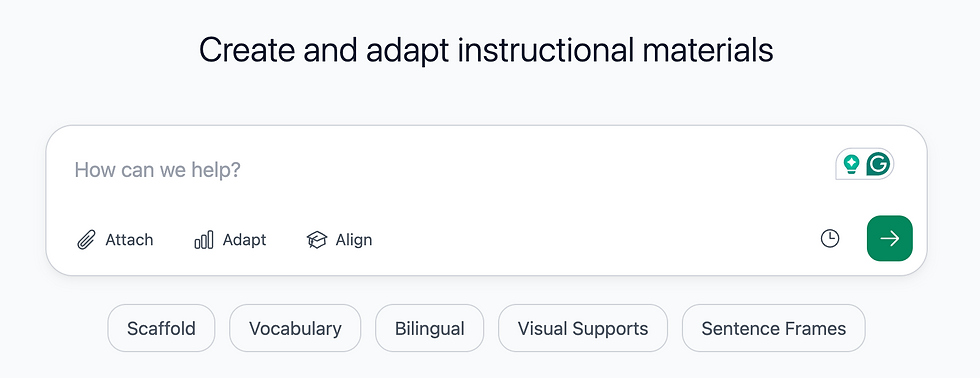
Luckily, earlier in the day, an email with activity suggestions from Diffit had landed in my inbox. So, I decided to upload my slides to Diffit to see what it suggested.
Within minutes, I had a fully structured station-rotation activity built from my own materials. It was differentiated, it was structured, and it was classroom-ready. During my 7th period yesterday, my students were more engaged than they had been by anything we had done so far this year.
This is a success story for both Year Zero in action and why Diffit is one of my core tools in classroom planning. Instead of constantly ramming my head into the wall with failed lessons, I've finally given myself the flexibility to fix what is not working before it becomes a pattern.
My Primary Use Case: Differentiation
Sometimes teachers hear "differentiation tool" and file it under "good idea I do not have time to implement."
However, differentiation is not the problem. Time is the problem.
Every teacher believes in meeting students where they are. Every teacher also knows what it actually takes to create multiple versions of the same activity for students with IEP accommodations, students with dyslexia, English language learners, and students who are ready to go deeper, while keeping the core content identical across all of them, while maintaining rigor at every level, while not creating tasks that feel condescending or stigmatizing for the students receiving the more scaffolded version.
That is not a planning task. That is a second job. And it is a second job that most teachers are quietly doing at 9pm on a Tuesday, or quietly not doing and feeling guilty about, or quietly doing in a way that compromises somewhere because there simply was not enough time to do it properly.
Diffit does not solve differentiation. Diffit solves the time problem that keeps differentiation from actually happening.
Diffit Differentiates and SO MUCH MORE!
Diffit's core function is elegantly simple. You give Diffit any source: a text you paste in, an article URL, a PDF, a YouTube video, a set of Google Slides, and it generates differentiated versions of that content at multiple reading levels, each one complete with comprehension questions, vocabulary lists, graphic organizers, and reading summaries. The content stays the same. The access point changes.
For my classroom specifically, that means a student with a dyslexia accommodation and a student reading above grade level can both engage with the Transcontinental Railroad: the same essential questions, the same core content, the same historical thinking demands, through a version of the text that actually works for their brain. Not a watered-down version for one and a harder version for the other. The same content, differentiated access.
With the push of a single button.
That phrase is not marketing language. It is literally what happens. One source. One click. Multiple versions. Ready to use.

What I did not fully appreciate until I started living inside Diffit on a more frequent basis... differentiation is only the beginning of what this tool does.
Diffit has evolved into a full lesson design engine. Beyond leveled reading passages, it can generate station rotation activities, which is exactly what saved my transcontinental railroad lesson yesterday, as well as choice boards, graphic organizers, vocabulary activities, comprehension question sets at different depths of knowledge, 3-2-1 summaries, discussion prompts, sub plans, unit tests, and intervention materials. It can take a YouTube video URL and turn it into a structured reading activity. It can take a Wikipedia page and turn it into a tiered station pack. It can take my own Google Slides (the ones that just failed spectacularly) from first period and turn them into something completely different by seventh.

The original use case I had for Diffit when I first added it to the Year Zero toolkit was a differentiation tool. Now, my primary use case is closer to a lesson design partner that happens to make everything it touches automatically accessible to every student in the room. Those are not the same thing. And the second one is significantly more useful.
How Diffit Changed My Planning Workflow
Diffit has freed me to be more ambitious with my content choices.
Before Diffit, there was a quiet calculation happening in my planning, a negotiation between what I wanted students to engage with and what I knew was realistically accessible to every student in the room. I would sometimes simplify a primary source before I even tried to use it, or choose a less challenging text because adapting the better one to multiple levels was going to take more time than I had. The ceiling of my content ambition was partly set by the floor of my planning time.
Diffit removes that negotiation. I can bring in a dense Retro Report transcript, a complex primary source, or, as happened yesterday, a set of slides I built that were not quite working, and within minutes I have a version that works for every student in the room. The ambition of the content is no longer limited by the time it takes to make it accessible.
That is a meaningful shift. Not just a time-saver. A genuine expansion of what is possible in the room.
The Transcontinental Railroad Lesson, Revisited
I want to come back to yesterday specifically, because I think it illustrates something important about how Diffit fits into my Year Zero philosophy.

Year Zero is not about building perfect lessons. It is about building a system flexible enough to respond when something is not working. The transcontinental railroad activity I ran on day one was not bad. It just was not right: not quite the right format, not quite the right entry point, not quite structured in a way that let students access the content and do something meaningful with it.
What Diffit gave me was not a better version of the same activity. It gave me a completely different structure, a station rotation, built from the same material, differentiated for the range of learners in my room, in the time it would have taken me to rewrite one section of one version from scratch.
My students were more engaged by that lesson than by anything we had done to that point in the year. Not because the content changed. Because the access point did.
That is the argument for Diffit in one lesson.
Why You Should Get With it and Diffit!
If you have a classroom full of students with IEP accommodations, students with dyslexia, English language learners, or simply the normal range of reading levels that exists in every real high school classroom, Diffit is the tool that makes differentiation something you actually do rather than something you aspire to.
If you are a teacher who does not have significant differentiation needs, but is drowning in lesson planning time, Diffit is still worth your fifteen minutes! Use it to build a station rotation from a text you were going to assign as a straight reading. Use it to generate a choice board from a unit you have already planned. Use it to turn a YouTube video into a structured activity with comprehension questions before you press play. Use it to create a sub plan from your existing materials in the time it used to take to write the sub plan instructions. Use it to generate a vocabulary activity, a 3-2-1 summary, or a discussion prompt set from anything you already have.
The differentiation is built in automatically, but the activity design is the thing that will keep you coming back even on the weeks when your class is humming along, and nobody needs a leveled text.
The free plan covers the core use case with no limits on topic-based reading generation. It exports to Google Docs, Google Classroom, Google Slides, and Google Forms. The learning curve is approximately fifteen minutes, and within your first session you will have generated something usable.
Start with a lesson you are already planning to teach. Upload whatever you have: slides, a text, a URL. Let Diffit build you a differentiated version. Watch what happens to the students who have been quietly struggling to access your content and have not been telling you.
That moment is the whole argument.


Comments